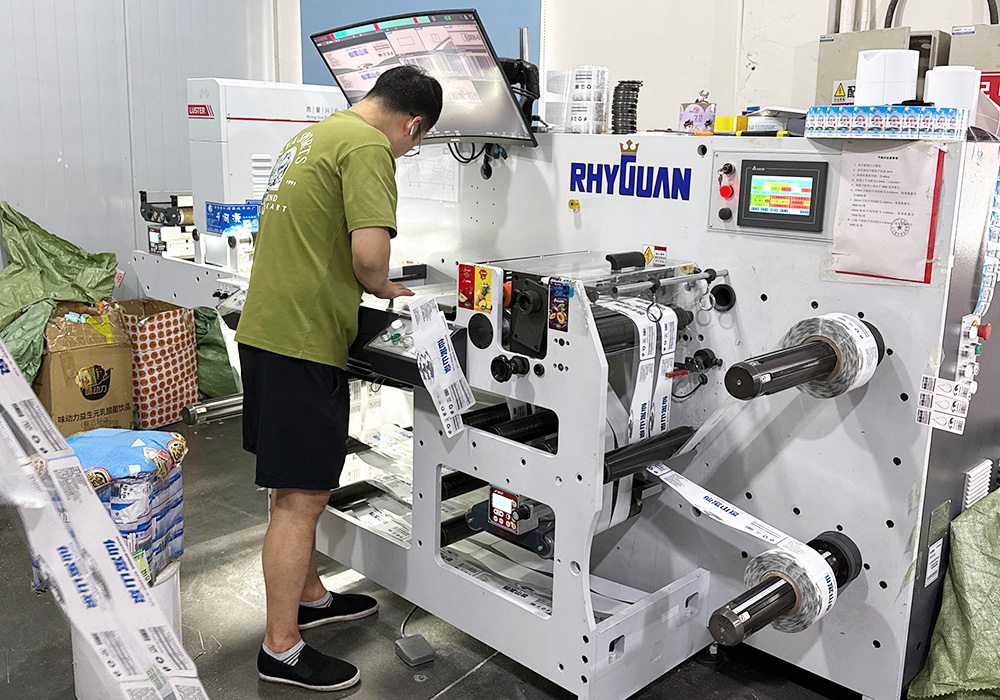
While labels in the food industry may appear simple, selecting the right ones involves navigating a complex set of technical requirements. Many food manufacturers, bakery brands, and fresh-produce processors frequently encounter issues after production begins—such as labels peeling due to condensation, text rubbing off upon contact with oils, adhesives failing in refrigerated environments, colors fading, or barcodes becoming unreadable. These problems can range from compromising the product’s appearance to failing regulatory compliance, ultimately leading to costly product rework, returns, or exchanges. Pressure-sensitive labels supplied in rolls represent the industry-standard solution for automated food production lines; they are the preferred choice for food companies looking to enhance labeling efficiency and ensure consistent packaging quality. Since its establishment in 2008, Anqing Hanghai Printing Co., Ltd. has specialized in the production and sale of roll-fed pressure-sensitive labels, with a deep focus on the food, pharmaceutical, and personal care sectors. Through standardized, systematic, and data-driven management—supported by a rigorous quality control system—the company provides food enterprises with tailored labeling and packaging solutions designed to perform reliably under diverse operational conditions.
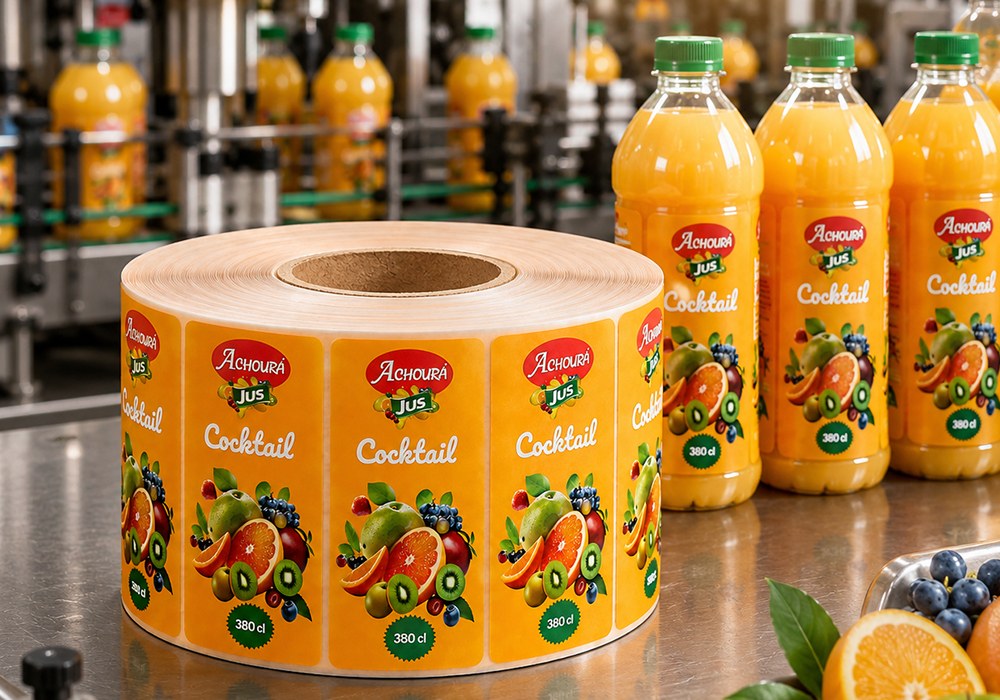
Supplied in a continuous roll format, these pressure-sensitive labels are engineered for seamless integration with automatic labeling machinery used for bottled, canned, bagged, or boxed food products. Compared to manual labeling with individual, pre-cut stickers, this approach offers faster application speeds, precise and consistent placement, and lower labor costs—making it an ideal solution for food manufacturing facilities with high daily output. Within the food industry, requirements for label materials, adhesives, and surface finishes vary significantly depending on the product category; therefore, selecting the right label requires a nuanced, case-by-case approach.
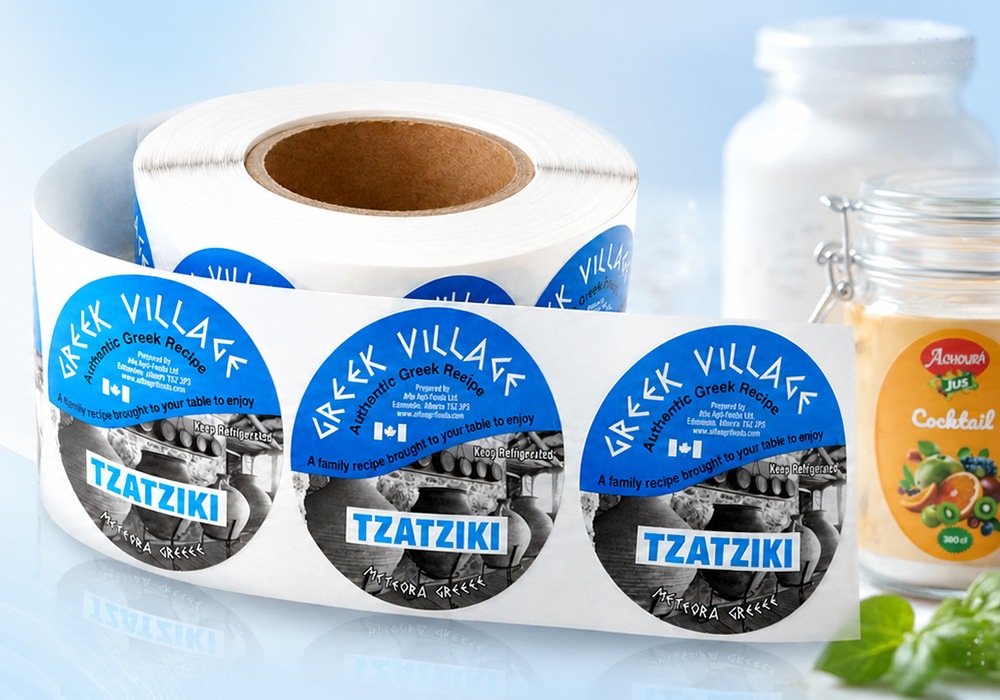
For shelf-stable dry goods, pastries, candies, and snack foods—which are stored in dry environments—coated paper self-adhesive labels (in roll format) are the preferred choice. They offer excellent color reproduction and high-detail printing, providing great value for displaying brand logos, ingredient lists, production dates, and key product selling points. For fresh meat, frozen dumplings, frozen seafood, and produce requiring cold-chain logistics—all of which are kept in low-temperature, high-humidity environments—standard coated paper labels are prone to wrinkling or losing adhesion when exposed to moisture. In these cases, synthetic paper or BOPP film-based roll labels are recommended; they are moisture-resistant, waterproof, and capable of remaining firmly attached even in environments where condensation forms, without the ink smudging. For products like sauces, cooking oils, or braised deli foods—where labels may come into frequent contact with grease—oil-resistant film labels paired with specialized oil-resistant adhesives should be used to prevent oil penetration and the blurring of text or graphics. For hot-filled beverages or canned goods that undergo high-temperature sterilization, heat-resistant labels are essential to ensure they do not detach or deform during the sterilization process.
Beyond the choice of material, compliance is a critical factor for food-grade roll labels. Both the adhesive and the face material must meet food packaging safety standards, utilizing “low-migration” formulations to ensure that no harmful substances migrate into the food. Furthermore, production dates, traceability QR codes, and SC (production license) codes must be clear and durable, with high scan-readability to facilitate regulatory oversight and product tracing. Rounded-corner die-cutting is also a standard feature for food-grade roll labels; it prevents the edges from curling or lifting and ensures smooth, stable feeding through high-speed automated labeling machines.
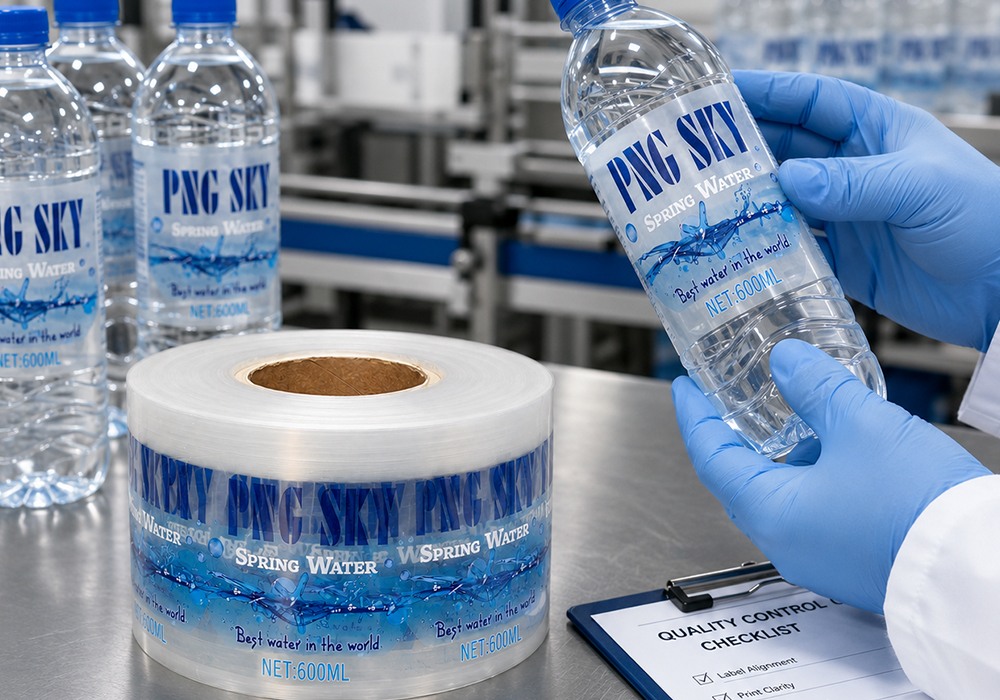
Many clients ask whether roll-format self-adhesive labels are suitable for small-batch food production. If a facility is already equipped with automated labeling machinery, roll labels remain the most convenient option—even for smaller batches—as they eliminate the labor-intensive tasks of manual sorting and peeling. Only in cases where there is no automated labeling equipment and the process is handled entirely by hand should one consider using individual (sheet-fed) self-adhesive labels.
Adhering to the core values of “professionalism, innovation, integrity, and excellence,” Anqing Hanghai Printing offers custom-made, roll-fed self-adhesive labels tailored to specific food categories, storage environments, and packaging materials—including PET bottles, glass bottles, and composite pouches. Our capabilities encompass full-color printing, variable QR codes, unique “one-item, one-code” serialization, and scratch-resistant lamination. If you are struggling with issues such as labels peeling off, colors fading, or slow labeling speeds, choosing the right roll-fed self-adhesive labels—specifically engineered for your operational conditions—can effectively resolve most of your packaging pain points in one go.